

A drink can be spiked without any visible change, and symptoms such as blurred vision or memory loss may appear quickly. If you suspect it has happened, contact local police as soon as possible and seek urgent medical help if someone is seriously unwell. Knowing how to report a drink spiking incident includes explaining what you noticed and when, even if your memory is incomplete.
It can be difficult to know what happened or what to do next, especially when you’re worried about your safety or a possible assault. This guide explains what drink spiking is, how to report suspected spiking to police, and what to consider if you fear you were sexually assaulted. It also covers immediate steps to get help and preserve important details.
Key Takeaways
- Spiking can affect someone even when a drink looks unchanged; notice sudden, unexpected symptoms and act promptly.
- Medical assessment and laboratory testing may help identify certain substances, but timing can affect what tests detect.
- If you fear a sexual assault, you can seek support even if your memory is incomplete or you haven’t decided whether to report.
- Reporting suspected spiking as soon as possible can help police understand what happened and consider time-sensitive evidence.
What is drink spiking?
Drink spiking means adding alcohol or another substance to someone’s drink without their knowledge or consent. It can involve nonalcoholic drinks too: Edmonton Police Service notes that soft drinks, tea, and coffee can also be spiked. Many substances used are colorless, odorless, and tasteless, so appearance or flavor may not reveal a change.
Effects can begin within minutes and vary depending on the substance and amount consumed. Symptoms may include blurred vision, confusion, memory loss, or feeling unusually drunk after only a few sips of alcohol. A sudden change is a reason to take possible spiking seriously, even if the drink looked and tasted normal.
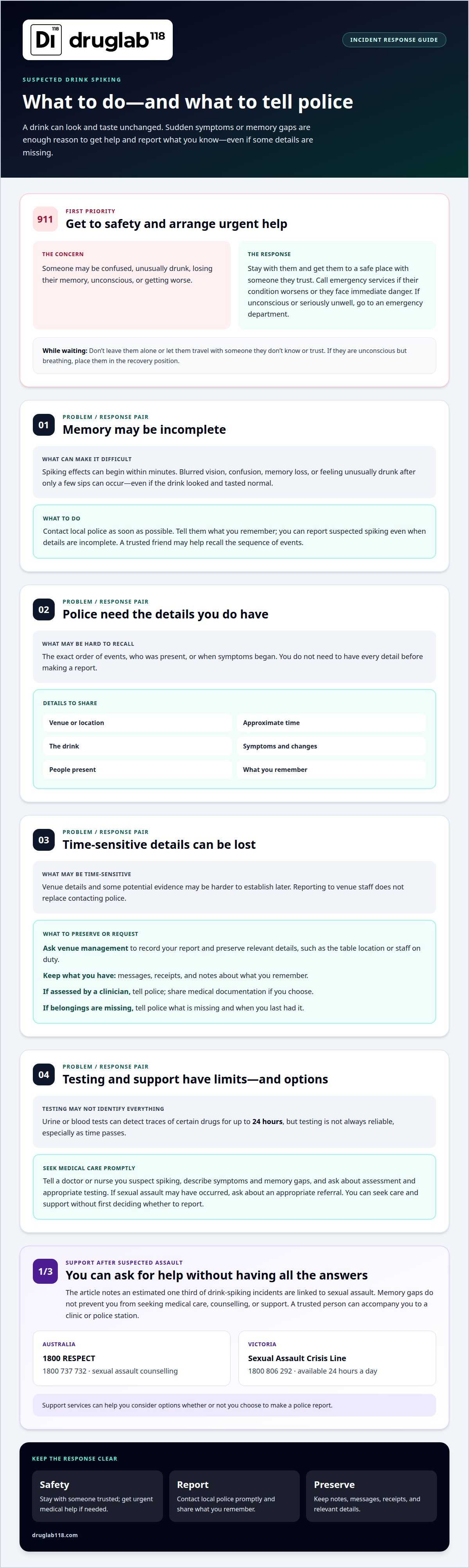
Help the person get to a safe place with someone they trust, then seek medical attention as soon as possible. If their condition worsens, call emergency services. If they are unconscious or seriously unwell, go to an emergency department. Don’t leave them alone or let them travel with someone they don’t know or trust.
Seek testing as soon as possible. Urine or blood tests can detect traces of certain drugs for up to 24 hours, but testing isn’t always reliable, especially as time passes. At the medical visit, tell a doctor or nurse what happened and ask about testing for appropriate substances. A helper can also request laboratory work.
If sexual assault may have occurred, medical care can address immediate health needs and possible drug testing. Tell the clinician you suspect spiking, describe the symptoms and any memory gaps, and ask about an appropriate referral. You can seek support even if you’re unsure what happened or can’t clearly recall events.
If you’re helping someone, stay with them and keep talking while arranging care. If they’re unconscious but breathing, place them in the recovery position while waiting for help. Don’t let them go home alone; keep them with someone they trust until medical professionals can assess them.
Reporting suspected sexual assault
Drink spiking can be associated with sexual assault: an estimated one third of incidents are linked to sexual assault. If you suspect you were assaulted, you can report it to police and seek medical care, even if you can’t remember everything. A friend or someone you trust can accompany you to a medical clinic or police station.
Tell the clinician your drink may have been spiked and describe what you remember, including changes in how you felt and whether you consumed alcohol. Ask about medical assessment and testing. Memory gaps don’t prevent you from seeking care or support. You don’t need to establish exactly what happened before asking for help.
Support is available whether or not you choose to report to police. In Australia, contact 1800 RESPECT on 1800 737 732 for sexual assault counselling. In Victoria, the Sexual Assault Crisis Line is available 24 hours a day on 1800 806 292. These services can help you consider support options and next steps.
If you decide to report, tell police you suspect spiking and possible sexual assault. Share the location, approximate timing, people present, and any details you recall. Someone you trust can help organize the information. If you also suspect theft, tell police which belongings are missing and when you last had them.
You can seek support even if you’re unsure whether you were assaulted, can’t clearly remember events, or aren’t ready to speak with police. A sexual assault support service can provide counselling and explain your options without requiring you to make a police report first.
Reporting suspected drink spiking to police
Contact local police as soon as possible after suspecting a drink was spiked. If someone’s condition worsens or they face immediate danger, call 911. You can report what happened even if memory loss means details are incomplete. Give police the venue, approximate time, drink, symptoms, and names or descriptions of anyone present. Friends can help recall the sequence of events.
Ask the venue manager to record your report and preserve relevant details, such as the table location or staff on duty. Reporting to the venue does not replace contacting police. If a doctor or nurse assessed you, tell police and share any medical documentation you choose to provide. Keep messages, receipts, and notes about what you remember.
For future outings, watch the bartender prepare your drink and stay with friends. If you suspect spiking at a venue, move somewhere safe with someone you trust rather than confronting anyone alone.
Can a venue or person be held legally responsible in the United States? There isn’t one answer for every case. Responsibility depends on the state and the facts, including what the person or venue did and knew. Reporting an incident alone doesn’t establish legal responsibility.
Can I report anonymously or confidentially? Contact local police and ask whether they can receive an anonymous tip or confidential report. You can share what you know, but don’t assume an anonymous tip will be handled like a formal report.
DrugLab118: DrinkDetective
DrugLab118’s DrinkDetective offers a rapid, forensic-grade detection solution for situations where drink-spiking concerns call for added awareness. It can complement safety planning, but it doesn’t replace urgent medical care, laboratory testing, or reporting suspected crime to police. For broader substance-detection needs, DrugDetective is another available testing kit.
Organizations seeking detection technology under their own branding can consider White Label Chemistry. Institutional Briefings provide education for organizations and government agencies on substance detection and safety protocols. These options serve different needs: individual awareness, private-brand partnerships, or institutional learning.
Choose the route that matches your purpose, and keep emergency response and official reporting central after a suspected incident. To discuss DrugLab118’s detection solutions, visit DrugLab118.
Turn awareness into preparedness
After an incident, the next step may be personal recovery; before one, it may be creating a clearer safety plan. Decide who you would call, how friends can stay connected, and what information you would preserve if something felt wrong. Knowing how to report a drink spiking incident can help you act more clearly under pressure, but you don’t need a complete account before asking for help.
For organizations, preparedness also means making substance-detection awareness part of staff and venue safety conversations. DrugLab118’s detection solutions can support that broader focus, alongside the medical and police response an incident may require. Consider what information would help your team recognize concerns and respond consistently.
Contact DrugLab118 to discuss detection solutions. Taking a practical next step can help make safety more visible and actionable.
Frequently Asked Questions
What are the warning signs?
Warning signs can include sudden blurred vision, confusion, memory loss, or feeling far more intoxicated than expected. Symptoms may begin within minutes, and a drink can look and taste unchanged. Feeling unusually drunk after only a few sips of alcohol, for example, warrants attention. Symptoms alone can’t identify a specific substance, so focus first on safety and medical assessment.
What should I do immediately if I think my drink was spiked?
Move to a safe place with someone you trust. Don’t leave alone or accept a ride from someone unfamiliar. Tell venue staff what you suspect and ask them to help contact someone you trust. Seek medical care promptly, and tell the clinician what you drank, when symptoms began, and whether you may have been assaulted. Keep any remaining drink untouched if it’s safe to do so.
When should I call 911 after suspected drink spiking?
Call 911 if the person’s condition deteriorates, they become unconscious, or they seem seriously unwell or in immediate danger. Don’t wait to see whether severe symptoms pass. Give the dispatcher the location, the person’s current condition, and any known substance or alcohol consumption. While help is coming, stay with them and follow the dispatcher’s instructions.
How do I report a drink spiking incident to police in the United States?
To understand how to report a drink spiking incident, contact the local police department serving the place where it happened, or call 911 for an emergency. Explain your suspicion and share the venue, approximate time, observed symptoms, and details about the drink or people present. Separate what you remember directly from information others shared with you.
How do I report suspected drink spiking to a bar, venue, or event organizer?
Knowing how to report a drink spiking incident at a venue starts with telling the manager, organizer, or security staff. Explain where and when the drink was served, what changed, and whether anyone needs medical help. Ask them to document your report and preserve relevant records, such as available video or staff details. Note who received your report, then contact police separately.


