

The larger panel isn’t automatically the stronger choice. Rapid forensic drug detection devices and multi-panel drug test kits may seem to solve the same problem, but they can serve different purposes. A “multi-panel” label generally means a kit screens for multiple drug classes. It doesn’t tell you which substances are included or make a result confirmatory.
Fast answers can matter when an organization needs to respond to a safety concern. But a rapid screening result is not the same as laboratory confirmation, and treating a presumptive result as definitive evidence can have serious consequences. This guide compares intended use, detection context, result limitations, and selection criteria to help you match a solution to your setting and response plan. It also offers practical questions to ask providers about targets, sample types, instructions, and organizational fit.
Key Takeaways
- Choose rapid forensic drug detection devices based on the decision and response pathway they need to support, not panel count alone.
- Before comparing options, define the setting, sample type, and next steps your organization needs to take.
- Ask providers to confirm target substances, intended detection contexts, instructions, and limitations for the specific solution.
- Explore whether DrinkDetective for drink detection or DrugDetective for surface detection fits your organization’s needs, then verify the precise use directly with the provider.
Rapid forensic drug detection devices and multi-panel kits: what is the difference?
These terms describe different things. Rapid field detection refers to testing designed for a particular context, such as checking a drink or surface for drugs or contaminants. A multi-panel kit describes a screening format that checks for multiple targets in a sample. These approaches aren’t interchangeable. The product’s purpose, sample type, instructions, and intended use determine what its result can help inform.
Some rapid screening methods use immunoassays, which rely on interactions between antibodies and target substances. Learn more about how immunoassay tests work. The method alone does not establish a product’s scope or suitability. Check the provider’s documentation, and don’t treat a rapid screening indication as laboratory confirmation or definitive evidence. Laboratory toxicology and medical assessment are separate services; DrugLab118 does not provide either.
What does a multi-panel format tell a buyer?
Panel terminology and coverage vary between products. Ask the provider to confirm the specific targets, sample type, intended setting, instructions, and limitations. A panel count tells you how many screening targets are included, not necessarily which substances are covered or how a result should guide your organization’s response.
Panel count alone cannot tell you whether a device fits an operational need. For example, a product designed to screen a biological sample may not address an organization’s need to detect substances in a drink or on a surface. A larger panel also does not establish forensic status or evidentiary value. Match the method to the decision: what you need to detect, where detection must occur, and what action follows a result. For any legal or evidentiary use, confirm requirements with qualified sources.
How to evaluate rapid forensic drug detection devices for your setting
Start with the decision, not the device. Clarify what your organization needs to detect and what action a result should inform. Then map the setting, sample type, response plan, and documentation your procurement process requires. A hospitality venue considering a drink check has a different operational need from a team checking a surface or personal belonging.
Ask the provider to confirm the intended detection context, target substances, instructions, and known limitations for the specific product. Request documentation that will help your team use the device and understand its results. Confirm who is responsible for follow-up decisions, and establish a response pathway before putting the device into use.
Which questions should a procurement team ask before choosing?
- Does the product’s intended use match the sample and setting, such as drinks, surfaces, or personal belongings?
- Which targets are covered, and what can a result support or not support?
- What instructions and documentation are provided, and who is responsible for follow-up?
A rapid result is not automatically a confirmed result. Screening can inform an immediate response, but it shouldn’t be treated as laboratory confirmation or definitive evidence. Organizations should follow applicable internal protocols and verify any legal or evidentiary requirements with qualified sources. If confirmation or medical assessment is needed, arrange that through an appropriate qualified provider; these are not DrugLab118 services.
Use the phrase rapid narcotic identification as a starting point for research, not as a substitute for checking product fit. DrugLab118’s detection approaches for organizations may be relevant to institutional planning. Confirm the precise context and requirements directly with the provider. Selection should reflect the full response pathway, not speed alone.
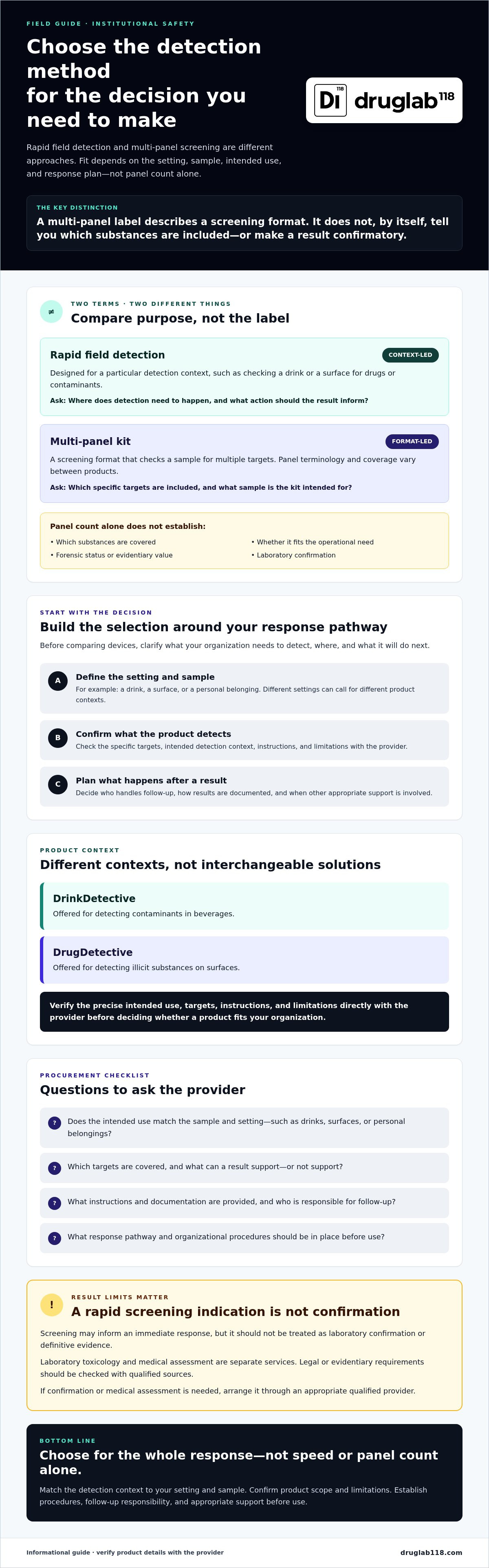
Match a detection device to your safety response and next steps
Before comparing formats, identify where the detection need arises and what your organization will do next. A venue considering drink detection needs a different product context and response pathway from a team assessing a surface. Clarify who will use the device, how results will be handled, and when to involve other appropriate support.
DrugLab118 offers DrinkDetective for detecting contaminants in beverages and DrugDetective for detecting illicit substances on surfaces. These are distinct contexts, not interchangeable solutions. Confirm the specific product’s targets, instructions, and limitations with the provider before deciding whether it fits your use.
How can institutions make detection visible and actionable?
Making testing visible can help establish detection as part of an organization’s safety culture and show that concerns are taken seriously. It does not guarantee prevention or resolve every incident. A device is one part of a broader response: anticipate risks, define procedures, identify appropriate support, and work with institutional partners. Keep those procedures under review as detection needs and available formats evolve.
Build the response pathway before deployment. Decide who can use the device, how a result will be communicated, and what action follows. Make sure screening is not represented as confirmation. Institutions can also review guidance on rapid response drug testing alongside their own protocols.
For organizations assessing drink or surface detection, a conversation with DrugLab118 can help clarify whether a product’s stated context aligns with operational requirements. Share the setting, intended use, and questions your team needs answered through DrugLab118’s institutional partnership information.
Choose the next step with confidence
The right solution starts with your organization’s setting and response pathway, not a panel count. Confirm what a device is designed to detect, where it can be used, and what its results can support. Rapid screening can inform action, but it shouldn’t be mistaken for definitive evidence or a substitute for appropriate follow-up.
DrugLab118 describes its detection as instant and forensic-grade across drinks, surfaces, and personal belongings. The company’s approach also emphasizes making detection visible as part of a broader safety culture. Verify that the specific product and its documentation match your organization’s needs. Clarity before selection matters.
If your organization is assessing rapid forensic drug detection devices, discuss your setting, intended use, and requirements with DrugLab118. Discuss your organization’s detection needs with DrugLab118 and take a considered next step toward a more informed safety approach.
Frequently Asked Questions
Are multi-panel drug test kits the same as rapid forensic drug detection devices?
No. A multi-panel kit is a screening format that checks for multiple targets in a specified sample, while rapid forensic drug detection devices may be designed for particular field detection contexts. The terms aren’t interchangeable, and “forensic” in a product description doesn’t establish suitability for every evidentiary purpose. Verify the sample type, targets, intended use, and limitations with the provider.
Can a rapid drug detection device provide definitive forensic evidence?
Not because of speed or a product label alone. A rapid result may indicate a substance or contaminant, but it shouldn’t automatically be treated as definitive evidence. Whether a result can support a legal or evidentiary decision depends on the method, its documentation, and applicable requirements. Organizations should follow their protocols and consult qualified sources about evidentiary use or the need for further analysis.
How do organizations choose between a multi-panel kit and a field detection device?
Start with the decision the test must inform, then identify the setting, sample, and response pathway. A multi-panel format may suit a need to screen a particular sample for several targets. A field device may address detection in a context such as drinks or surfaces. Compare confirmed product uses, not just panel count or speed. Rapid forensic drug detection devices must fit the task.
What should we verify before adopting a rapid detection device?
Ask the provider to confirm target substances, intended sample and detection context, instructions, result interpretation, and known limitations. Request documentation relevant to your organization’s use, and clarify who handles follow-up decisions. Establish a response plan before deployment, including what happens after a non-negative or unclear result. Check any applicable organizational, legal, or evidentiary requirements with qualified sources.


